
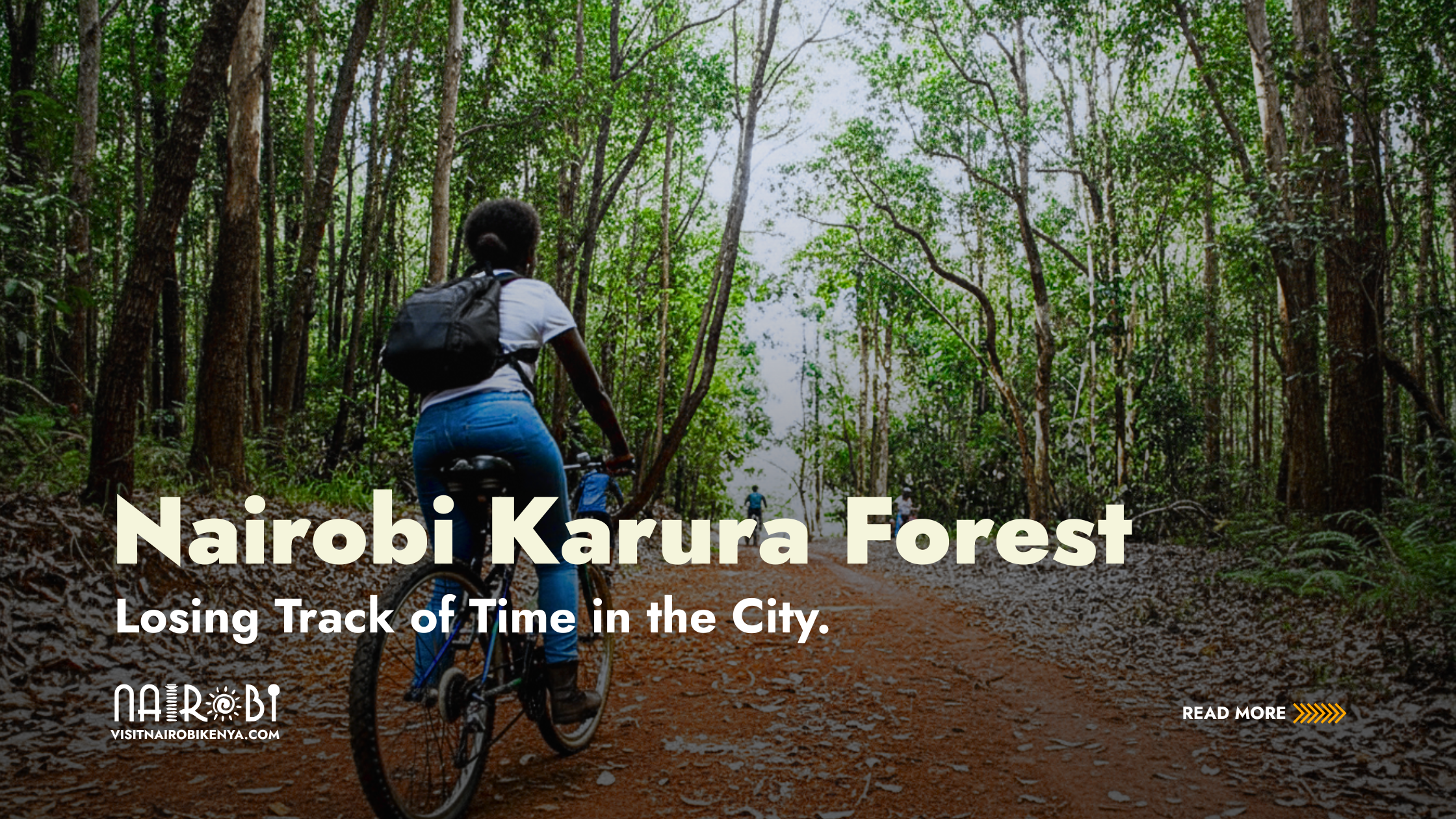
Karura on a weekend has its own kind of charm. Joggers splash through the mud, looking like they are already halfway to a marathon. Cyclists weave in and out of the trees, bells ringing as they pass. A couple sets up a picnic under the bamboo tunnel, the kind of spot that feels too perfect to be accidental. And near the gate, the smell of roasted maize hangs in the air, daring you to choose between chasing the sound of the waterfall or grabbing a hot cob before you start your walk.
Do you need to have a plan to go to Karura? Not necessarily, just avail yourself, and the day will flow perfectly.
The History of Karura
Karura forest is not just another green patch in the city. At 1,000 hectares, it is one of the largest urban forests in the world and it has history written into its soil. This is where the late Wangari Maathai, Nobel Peace Prize winner and environmental activist, fought tooth and nail to protect it from developers. Today, walking under the tall trees feels like walking through her legacy.
The forest has over 200 bird species, caves that Mau Mau fighters once used for hideouts, and waterfalls that somehow look even better after heavy rains. Whether you’re a nature buff or not, there’s something grounding about knowing the trees you’re passing have witnessed decades of Kenya’s story.
Things to Do
You don’t have to be a hardcore hiker to enjoy Karura. There are over 50 km of marked walking and cycling trails, so you can go for a casual stroll, jog, or bring your bike. Picnics are welcome in designated areas, and yes, you can bring your dog (on a leash). There are caves to explore, streams to cros,s and even a butterfly walk if you slow down enough to notice the details.
If you would rather relax, there is also a café near the main gate where you can sip coffee while pretending you’ll join the joggers… later.
Practical Bits to Know
Location: There are three main entrances — Limuru Road (main gate), KFS Gate, and Kiambu Road Gate.
Hours: Open daily, 6 a.m. to 6 p.m.
Entry Fees: About KSh 242 (USD 1.87) for Kenyan adults, KSh 121 (USD 0.94) for kids. Non-residents pay a bit more, around KSh 600 (USD 4.64) for adults. Dogs are charged too, at about KSh 121 (USD 0.94).
Parking: Available inside, around KSh 100–200 (USD 0.77-1.55) depending on your vehicle.
Extras: Bike rentals are available at the main gate if you don’t bring your own.
The beauty of Karura is that it gives you options. One day, you are here, sweating it out on a 10k run, another day, you are strolling slowly, hand in hand with a friend, or taking photos by the waterfall. Ask a local and they will tell you Karura is the city’s reset button: safe, open, and always refreshing. Ask a visitor and they will tell you that it is the kind of surprise only Nairobi could pull off, a massive forest sitting calmly inside a bustling capital.
Of course, it is not perfect. On weekends, it can get crowded, especially around the picnic spots. The entry fees for non-residents feel steep compared to what locals pay, and sometimes you will wish for more food vendors inside. But honestly? The pros outweigh the cons. Clean air, wide open trails, and that rare feeling of being immersed in nature right in the middle of a bustling city.
Karura has a way of meeting you where you are. Some days it gives you sweat and sore legs, other days it gives you nothing more than quiet and fresh air. Either way, you always leave feeling lighter.
Whether you’re looking to go for a run, a picnic, or simply a quiet walk under the trees, every visit feels different in Karura. Share your experience with us for a chance to be featured, or start planning your own adventure with us on our website to the city’s best green escapes, stays, and experiences.